Blog
BIO-FENCING IN GOVERNMENT AYURVEDIC HEALTH CENTRES
1.1 Introduction The term ‘fencing’ refers to the protection of a piece of land by external threats and uncertainties. But this word usually brings to the mind a long cement wall surrounding a plot of land or barbed steel wires attached to granite pillars around the periphery…
3 min read · 618 words
1.1 Introduction
The term ‘fencing’ refers to the protection of a piece of land by external threats and uncertainties. But this word usually brings to the mind a long cement wall surrounding a plot of land or barbed steel wires attached to granite pillars around the periphery of the land. The investment for either constructing a wall or putting up steel wires is quite heavy for small and marginal farmers across the state. But fencing is extremely essential in all farms in order to provide protection from animals and keep the plants safe. An alternative to this is the emerging concept of bio-fencing which will help provide the desired protection along with being eco-friendly.
1.2 The Plan
Since bio-fencing is a very viable alternative to the traditional concept of fencing, we propose to implement the same in 325 Ayurvedic Health Centres across Himachal Pradesh. To carry out the same, the following steps need to be taken:
- Impart one-day training to around 50 employees in a batch (consisting of doctors, labourers, etc.) in RIISM for the plantation of MAPs for the fence and its maintenance thereafter. We plan to complete the training in the month of May, 2018
- Develop a layer of temporary fencing with the help of shrubs contacting nails collected from the forest with the objective of protecting the farm from animal invasion. This should be completed by the 1st of June, 2018
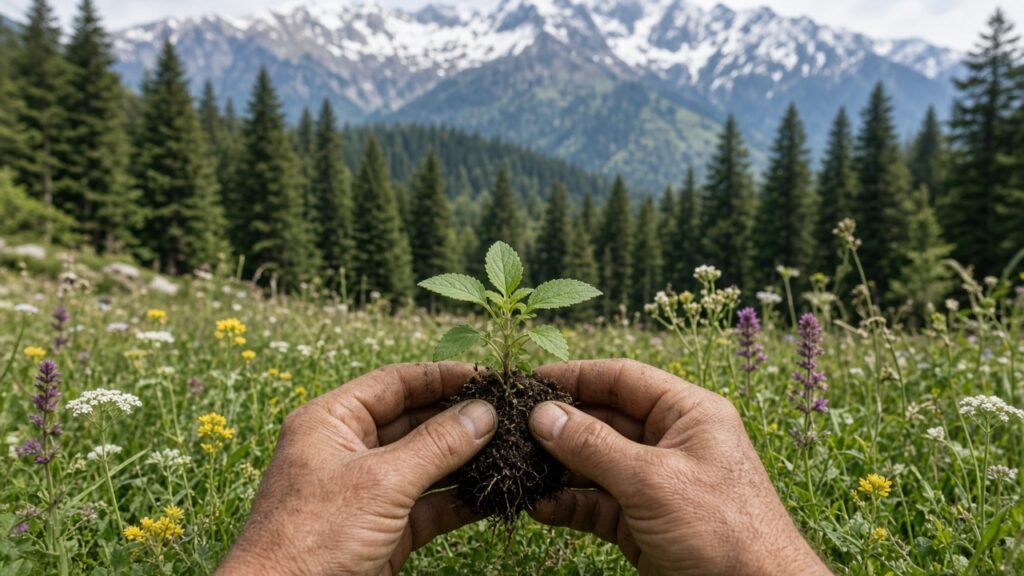
- From June 15th onwards, we want to begin the plantation for the fence. It will be a 3-layered fence consisting of 3 different kinds of plants, each with its own specific uses.
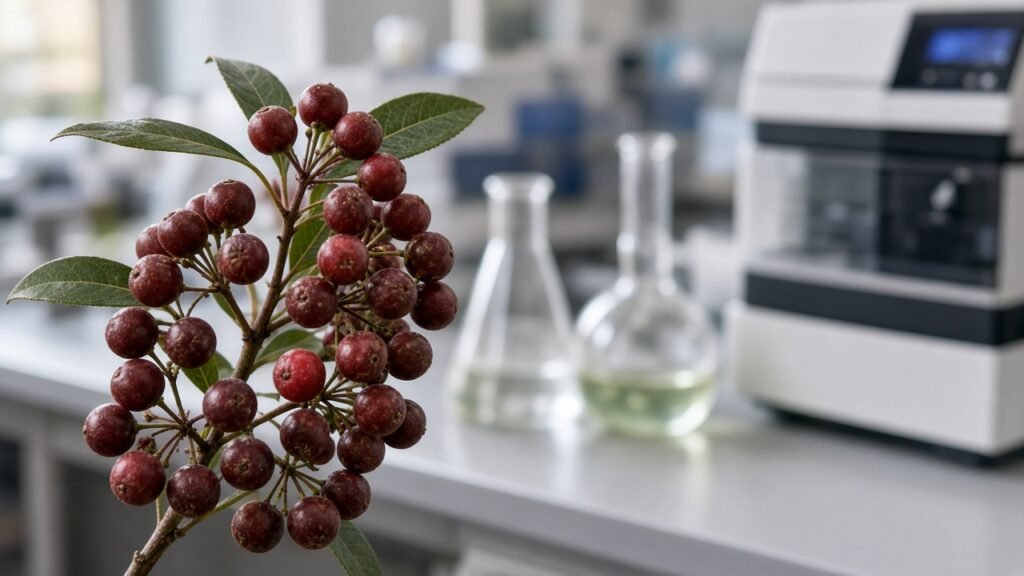
- The outermost layer will consist of crops like Katrin, Bulgarian Rose, Kubjal Gulab to provide protection against monkeys, mosquitos and various kinds of other insects which can damage the crops. At the vertex and centre of the layers, trees like Arjun, Ginkgo Bilova, Crataegus oxyacantha Barbarise species will be planted to strengthen protection. Climbers like Malkangni, Dioscorea shall be planted near Arjun trees. There will be a total of 8 trees that will be planted in this layer
- The next inner layer will comprise certain aromatic plants and bushy plants like Raat ki rani, etc.
- The innermost layer will consist of plants like lemongrass for their medicinal properties
1.3 Benefits
- The primary objective of bio fencing is to provide protection to all the farms which belong to small and marginal farmers who cannot afford to invest in traditional fencing
- Along with this, bio-fencing will act as a great tool to protect the crops from the menace caused my monkeys, mosquitos and other insects which damage crops
- By choosing multi-purpose plants for fencing, it can also aid in farming by providing micro nutrients for the crops
1.4 Implementation Methodology
- Lemongrass will be provided to the workers of the AHCs when they come to the centres for training. 240 shoots of the plant will be given to be planted at a distance of 1 feet on an average on a running metre of 240 feet Also, a kit will be given to them when they come for training which will consist of the following:
- Root Hormone
- Sketcher
- Spade (Faruha)
- Pick Axe (Gainti)
- Water can
- For plants like Hibiscus, Mehndi we will propagate through cutting by using local materials and for this purpose the workers will be provided training for both sourcing the materials and for plantation
- The Arjun trees shall be procured locally from the forest department nurseries or the herbal gardens will try to supply them
- Plants of Malkangni and Arjun shall be supplied by Herbal gardens Nery (Hamirpur)
1.5 Budget
Dr Arun Chandan RD RCFC-North RIISM, Joginder Nagar
General education, not a diagnosis or emergency care. Medical disclaimer.
Stay Updated with Ayurvedic Wisdom