Blog
Documentary Proposal:
“High-Value Precious Himalayan Herbs: Raising Serious Concerns of Supply Chain Management” “Himalayan Green Gold: The Struggle for Sustainability”…

4 min read · 826 words
“High-Value Precious Himalayan Herbs: Raising Serious Concerns of Supply Chain Management”
“Himalayan Green Gold: The Struggle for Sustainability”
Introduction:
The Himalayan region is home to some of the world’s most precious and highly sought-after medicinal herbs, many of which have been used for centuries in traditional healing practices. These herbs, such as Saffron, Kutki, Vankakri, Ashwagandha, Shatavari, Cordyceps, and Ginseng, are not only critical to the wellbeing of local communities but are also valued worldwide for their powerful therapeutic properties. However, the supply chain for these herbs faces significant challenges that threaten both the sustainability of these plants and the livelihoods of those who rely on them.
The Himalayan herbs industry has immense potential, not only for healing but also for driving economic development in the region. However, without addressing the critical challenges facing the supply chain, the long-term sustainability of these herbs and the livelihoods of the people who rely on them are at risk. By implementing sustainable practices, enhancing infrastructure, and ensuring fair trade, we can secure a prosperous future for both the plants and the communities that cultivate them.
Key Issues in the Supply Chain:
Over-Harvesting and Unsustainable Practices: The increasing demand for Himalayan herbs has led to over-harvesting in some regions, depleting natural reserves faster than they can regenerate. Unsustainable harvesting methods and the destruction of ecosystems have resulted in a sharp decline in some herb populations. Without proper management, this trend could lead to the extinction of key species.
Climate Change Impacts: Climate change is causing unpredictable weather patterns and disrupting the delicate ecosystems of the Himalayas. This affects the growth cycles of plants, alters the availability of water, and impacts the geographical distribution of these herbs. The changing environment poses a grave threat to the quality and quantity of medicinal plants available for commercial use.
Lack of Regulation and Standardization: The absence of uniform standards for harvesting, processing, and trade of medicinal herbs has created a chaotic and unregulated market. This results in variations in quality, contamination, and adulteration, which undermine the credibility and safety of these herbs. Furthermore, the lack of proper certification and traceability makes it difficult for consumers to verify the authenticity and sustainability of products.
Inadequate Infrastructure and Logistics: Remote Himalayan regions where these herbs are grown often lack the necessary infrastructure for efficient transportation and storage. Poor road connectivity, inadequate cold storage facilities, and limited processing units contribute to post-harvest losses and increase the cost of transporting these herbs to markets. This inefficiency also leads to spoilage and a lack of freshness, which diminishes the value of the herbs.
Ethical Concerns and Exploitation of Local Communities: The herbal trade has resulted in the exploitation of local communities, particularly indigenous populations, who have little control over the commercialization of their natural resources. Many communities do not receive fair compensation for the labor and knowledge they contribute to the harvesting of these valuable plants. Furthermore, there is little focus on educating these communities about sustainable harvesting techniques and value addition.
Market Fluctuations and Price Volatility: The market for Himalayan herbs is highly volatile, with prices fluctuating based on demand, supply, and external factors such as weather conditions and geopolitical events. This unpredictability makes it difficult for farmers and traders to secure stable income, resulting in uncertainty and disinvestment in herb cultivation.
Proposed Solutions:
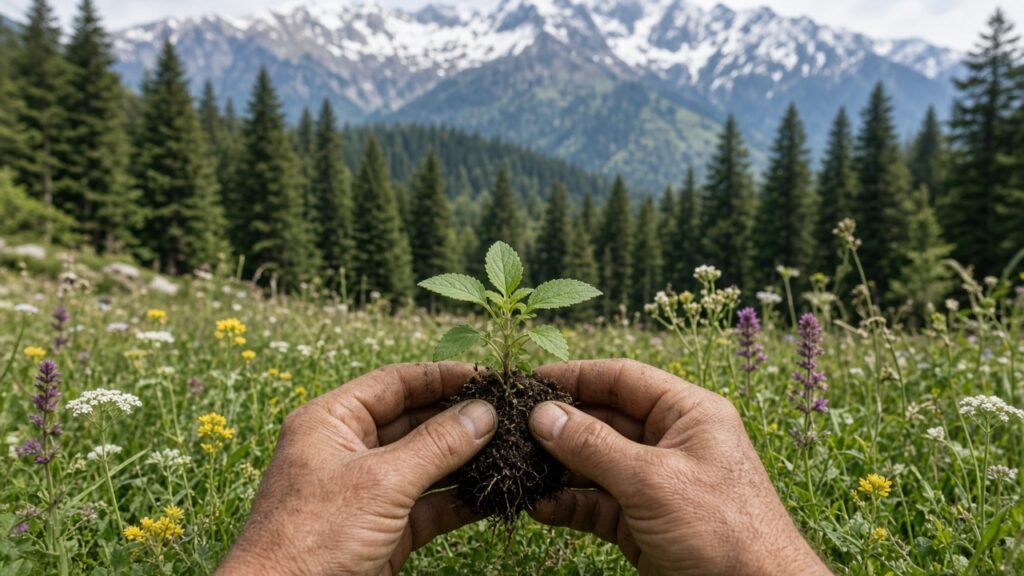
Sustainable Harvesting Practices: Implementing and promoting sustainable harvesting methods, such as ensuring the plants are allowed to regenerate and protecting the surrounding ecosystems, will help prevent over-exploitation. The introduction of certifications and labels for sustainably sourced herbs can incentivize responsible practices.
Climate-Resilient Herb Cultivation: Introducing climate-resilient cultivation techniques, such as greenhouse farming, agroforestry, and controlled environment agriculture, can ensure the stable production of medicinal herbs despite climate fluctuations. Collaboration with agricultural research institutions can help develop crop varieties that are better adapted to changing climatic conditions.
Regulation and Standardization: Establishing robust regulations and standards for the entire supply chain—from harvesting to processing—can ensure quality control and reduce the risk of contamination and adulteration. Certification agencies like HerbHealCert can play a key role in validating ethical sourcing and ensuring transparency.
Infrastructure Development: Investment in better infrastructure, such as improving roads, establishing cold storage units, and setting up local processing centers, is essential to reducing post-harvest losses and increasing the value of the herbs in the market. This would also help lower the costs of transportation and make the supply chain more efficient.
Empowerment of Local Communities: Training and educating local communities about sustainable cultivation, value addition, and fair trade practices can empower them to take ownership of their resources. Creating cooperatives or community-run organizations can give these communities a stronger voice in the herbal trade and ensure fair compensation for their efforts.
Market Stabilization: Developing market linkages and cooperatives can help stabilize prices and reduce volatility. Long-term contracts with buyers, especially for organic and sustainably sourced herbs, can offer more stability to farmers and traders.
Dr Arun Chandan
November 21,2024
7018001026 doctorchandan@gmail.com
General education, not a diagnosis or emergency care. Medical disclaimer.
Stay Updated with Ayurvedic Wisdom