Blog
India Must Respond to the FDA’s New Botanical-Drug Policy Window
A policy note on Ayurveda, medicinal plants, botanical active pharmaceutical ingredients and Indian exporters Dr Arun Chandan | Ayurveda and Medicinal Plants…

6 min read · 1,277 words
A policy note on Ayurveda, medicinal plants, botanical active pharmaceutical ingredients and Indian exporters
Dr Arun Chandan | Ayurveda and Medicinal Plants Expert
doctorchandan@gmail.com 7018001026
5 September 2026
A timely regulatory opening
On 3 September 2026, the United States Food and Drug Administration announced a Request for Information (RFI) on advancing botanical drug products. The notice was published in the Federal Register on 4 September under Docket No. FDA-2026-N-9550. Comments, data and information may be submitted until 3 November 2026. The FDA is asking researchers, clinicians, industry and other stakeholders to explain the scientific, regulatory and economic barriers they face, and to propose workable solutions that preserve safety, efficacy and quality.
This is more than a routine consultation. Only four botanical products have so far obtained US marketing approval through the prescription new drug application or biologics pathways. The FDA now seeks views on quality standards, batch-to-batch variability, suitable study designs for complex mixtures, minimally purified products versus isolated compounds, real-world evidence, well-established use and improvements to its 2016 Botanical Drug Development guidance. A joint FDA-European Medicines Agency workshop on herbal medicinal and botanical drug development is also scheduled for 25 September 2026. Together, these actions indicate an important period of regulatory reconsideration and international dialogue.
Why this matters to Ayurveda
Ayurveda possesses a vast pharmacopeia, long clinical use and sophisticated knowledge of formulation. Yet traditional use, however valuable, does not by itself establish compliance with the US legal standard for a drug intended to diagnose, cure, mitigate, treat or prevent disease. The present window should therefore be approached neither as automatic recognition of Ayurveda nor as a reason to abandon its systemic identity. It offers a chance to explain, scientifically and respectfully, why complex botanical mixtures require evaluation models that are rigorous but not designed exclusively around a single purified molecule.
Ayurvedic formulations raise questions that are directly reflected in the RFI: how to define and control a chemically complex product; how to accommodate natural variation without accepting inconsistency; how to select clinically meaningful comparators and endpoints; and how historical use, observational evidence and contemporary trials can form a coherent evidence package. India can contribute real experience on identity, pharmacopoeial standards, classical formulation, safety monitoring and clinical practice. That contribution must be presented as organised evidence, not as a claim of exemption from modern evaluation.
Implications across the Indian value chain
| Stakeholder | Relevance and required response |
| Medicinal-plant sector | Botanical identity, geographic origin, cultivation practices, harvest stage, post-harvest handling and storage become part of product reproducibility. Farmers and collectors are therefore upstream participants in pharmaceutical quality. |
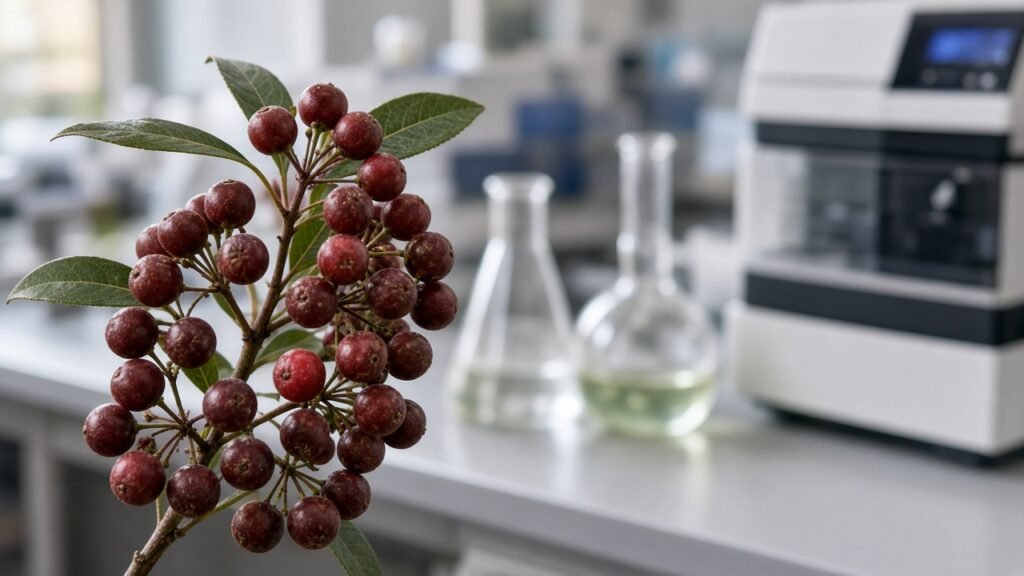
| Botanical APIs and extracts | Extract ratios, solvents, fingerprints, marker ranges, contaminants, stability and process controls must connect each batch to the material used in nonclinical and clinical studies. |
| AYUSH manufacturers and researchers | Selected products need indication-specific development plans, defensible intellectual-property strategies, pharmacovigilance, qualified clinical sites and early engagement with regulators. |
| Indian exporters | Exporting an Ayurvedic medicine, a dietary supplement, a food ingredient and an FDA botanical drug are legally different activities. Claims, labels, evidence, manufacturing systems and market-entry routes must match the intended US category. |
The opportunity, and the necessary caution
For Indian exporters, the FDA consultation could ultimately create greater clarity and more proportionate development pathways. But it does not change current law, approve any ingredient, recognise an AYUSH licence in the United States, or convert dietary supplements into drugs. Disease claims can place a product within the drug framework. Companies must decide the intended category and indication before designing the evidence and manufacturing programme. Regulatory ambiguity at this stage can produce warning letters, rejected shipments, wasted trials and reputational damage.
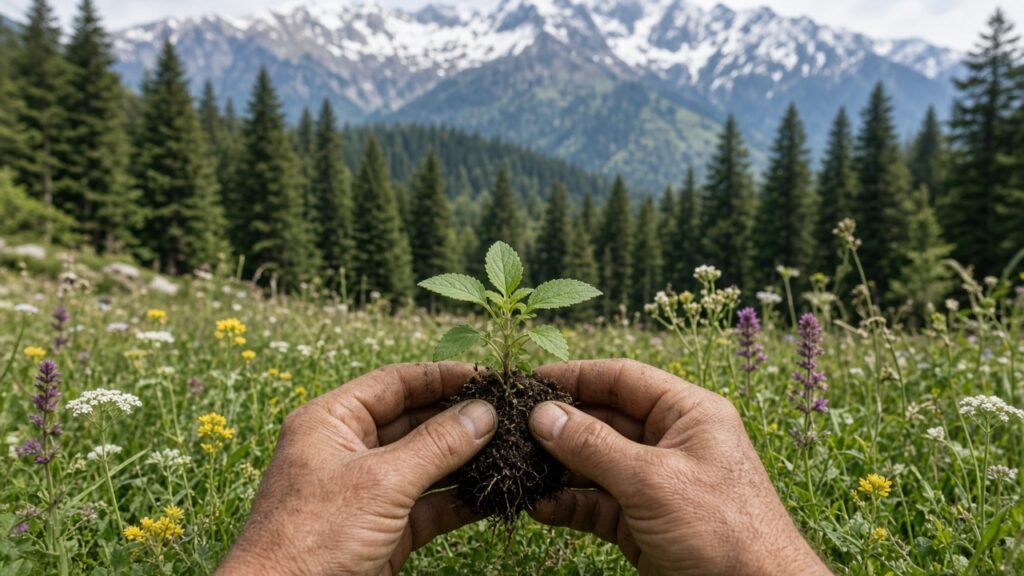
The larger opportunity lies in moving India from being mainly a supplier of raw herbs and commodity extracts to becoming a developer of clinically validated, traceable botanical therapeutics. This requires retaining more scientific and economic value within the country. Botanical APIs should be supported by authenticated planting material, good agricultural and collection practices, documented processing, validated analytical methods, reference standards, stability data and transparent chain-of-custody systems. Sustainability, biodiversity protection and fair farmer participation are not separate social concerns. They are foundations of reliable long-term supply.
Recommended national response before 3 November 2026
India should not leave the docket to isolated companies or consultants. The Ministry of AYUSH, Ministry of Commerce and Industry, Department of Pharmaceuticals, Indian Pharmacopoeia Commission, Pharmacopoeia Commission for Indian Medicine and Homoeopathy, CDSCO, NMPB, ICMR, CSIR institutions, universities, industry associations, quality laboratories, clinical researchers and exporter bodies should prepare a coordinated technical response.
- Constitute a time-bound national working group to submit a consolidated Indian comment, supported by non-confidential examples from actual botanical development programmes.
- Ask the FDA to clarify fit-for-purpose chemistry, manufacturing and controls for complex mixtures, including acceptable fingerprinting, marker-based controls and justified ranges for natural variability.
- Propose scientifically credible trial approaches for multi-constituent products, including pragmatic and adaptive designs where appropriate, validated patient-reported outcomes, external controls, and confirmatory studies proportionate to risk and intended claim.
- Recommend a transparent framework for using well-established human experience, published literature, pharmacovigilance, registries and other real-world evidence without treating historical use as a substitute for product-specific evidence.
- Seek early scientific-advice mechanisms and clearer bridging expectations when a traditional formulation is adapted in dosage form, manufacturing process or indication for US development.
- Support convergence among FDA, EMA, WHO and recognised pharmacopoeial bodies while preserving country-specific legal decisions. Harmonisation of terminology, botanical nomenclature and quality data would reduce avoidable duplication.
- Launch an Indian botanical-drug readiness programme that selects a limited number of promising candidates and funds gap assessment, authenticated supply chains, analytical validation, toxicology, clinical development and regulatory engagement.
A proposed Indian farm-to-clinic evidence architecture (Our BDP Angle)
The response should demonstrate an integrated model: authenticated germplasm and cultivation; documented collection and primary processing; identity and contaminant testing; reproducible extraction or formulation; chemical and biological characterisation; stability; nonclinical evaluation where needed; ethically designed clinical studies; and post-market safety monitoring. A digital traceability record should connect farm or collection area, batch processing, laboratory results and clinical material. Public batch transparency can strengthen confidence while confidential manufacturing knowledge remains protected through appropriate submission channels.
This architecture would benefit more than prospective botanical drugs. It would raise the reliability of medicinal-plant trade, botanical APIs, nutraceutical ingredients and AYUSH exports. It can also create incentives for cultivated supply, reduce adulteration and substitution, reward quality planting material, and give farmers a clearer relationship with regulated markets. The central policy principle is simple: quality cannot be tested into a finished bottle if identity and process control were weak at the field and raw-material stages.
The FDA’s public-input window should be treated as a strategic invitation to participate, not merely an American regulatory event. India holds deep traditional knowledge, biodiversity, clinical experience, scientific institutions and a large manufacturing base. What remains fragmented is the translation of these strengths into product-specific, internationally intelligible evidence packages.
A confident Indian submission should defend the scientific legitimacy of complex botanical medicines while accepting that therapeutic claims require demonstrable quality, safety and efficacy. It should seek regulatory proportionality, not lowered standards. If India responds collectively and then invests in a small number of well-chosen development programmes, Ayurveda and Indian medicinal plants can move from the margins of global herbal commerce toward credible leadership in botanical therapeutics.
Primary references
1. U.S. Food and Drug Administration. “FDA Seeks Public Input to Advance Development of Botanical Drug Products.” 3 September 2026.
2. Federal Register. “Advancing Development of Botanical Drug Products; Request for Information.” 91 FR 56887, Docket No. FDA-2026-N-9550. 4 September 2026.
3. U.S. Food and Drug Administration. “Botanical Drug Development: Guidance for Industry.” December 2016.
4. U.S. Food and Drug Administration. “Regulatory Perspectives on Herbal Medicinal/Botanical Drug Product Development: Joint FDA/EMA Workshop.” 25 September 2026.
General education, not a diagnosis or emergency care. Medical disclaimer.
Stay Updated with Ayurvedic Wisdom